

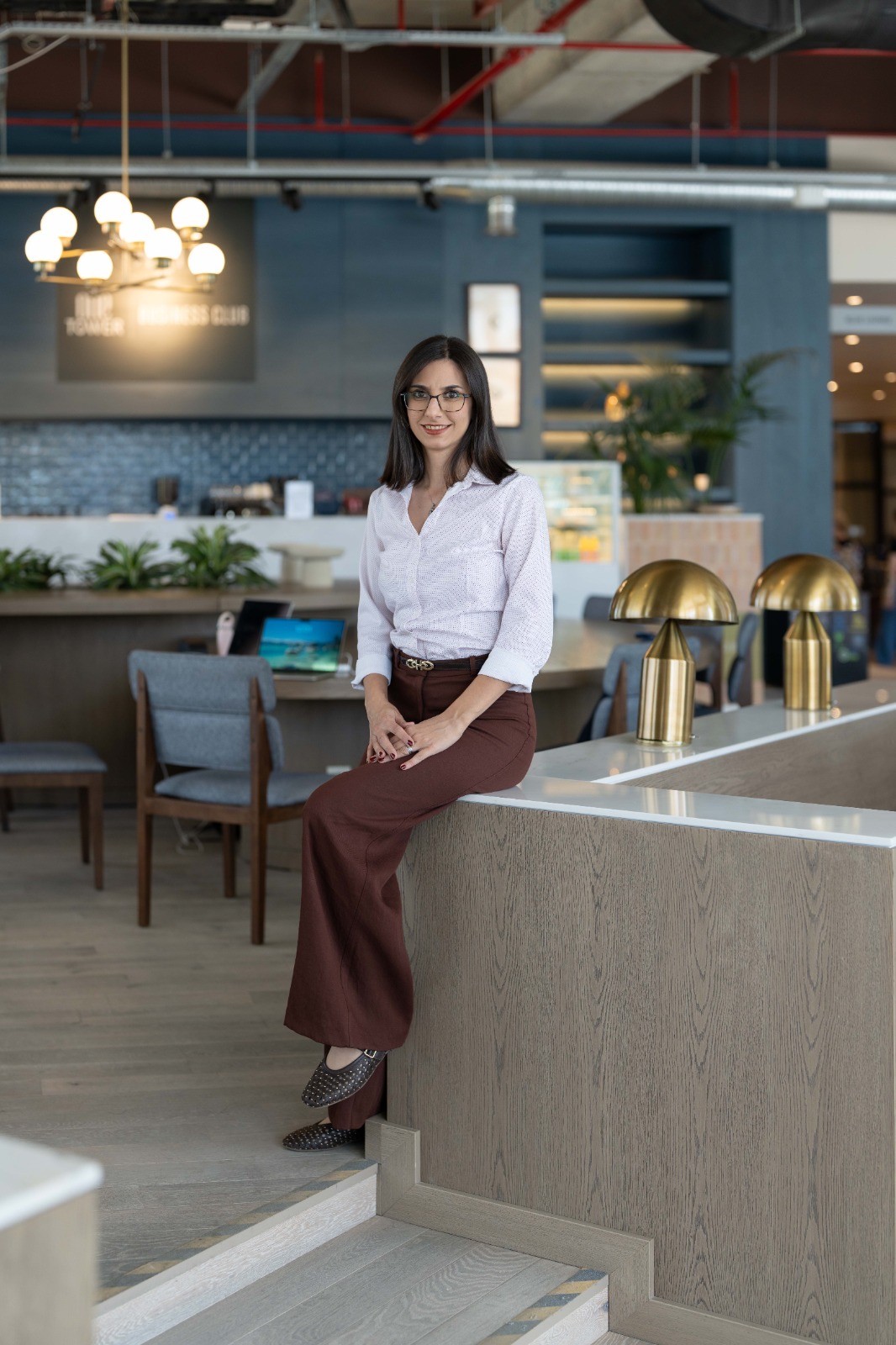
In this conversation, Monika shares her insights on raising the bar for workplace experience in Turkey, the impact of the WELL Coworking Rating framework on decision making, and what other operators can learn from One Tower’s pioneering approach.
What motivated One Tower Business Club to pursue the WELL Coworking Rating, and why was now the right time?
One Tower Business Club had already built a strong operational track record — strong occupancy, a diverse international member base, and a genuinely active events and community calendar. What was missing was an external, internationally recognised benchmark to demonstrate that the wellbeing side of that experience was more than simply part of the Club’s positioning.
We began the process in March, at a point when the Club had matured operationally and we wanted to take our approach to wellbeing one step further. Rather than simply adding another amenity, the focus was on measuring and strengthening what we were already doing.
The WELL Coworking Rating gave us a structured framework to assess the workplace against a global standard, covering areas including air and water quality, lighting, movement, nutrition and restorative spaces. OTBC became the first flexible workspace operator in Turkey to achieve the WELL Coworking Rating.
How does achieving the WELL Coworking Rating align with your vision for the future of flexible work in Turkey?
Turkey’s flexible workspace sector has traditionally competed on price, location and design. Those remain important, but they are increasingly becoming table stakes.
The next differentiator is whether an operator can demonstrate, with evidence, that the workplace supports how people actually perform and feel day to day. That’s much harder to demonstrate through design alone.
For us, being first is not simply about being ahead of what members are asking for today. It is about recognising where expectations are heading — particularly among international occupiers and companies that increasingly evaluate workplace quality, employee experience and wellbeing as part of their workspace decisions.
Being WELL Coworking Rated allows a Turkish flexible workspace to participate in that conversation on the same terms as operators in London, Amsterdam or Dubai, with an internationally recognised benchmark behind the experience.
What does this achievement mean for your members, and how will it enhance their day-to-day workplace experience?
For members, the rating is ultimately about the experience they have every day.
Every element of the workplace — from air quality and lighting to movement, nutrition and access to restorative spaces — has been assessed against a defined standard rather than left to instinct.
Most members will not necessarily notice each individual intervention, but they should feel the difference in their comfort, energy, focus and overall experience throughout the working day.
For a diverse membership base like ours, including startups, multinational companies, and diplomatic and cultural organisations, that consistency matters. It creates a shared baseline of quality for everyone using the Club, regardless of the size or nature of their organisation.
Ultimately, that is what makes the WELL Coworking Rating meaningful: not simply the features themselves, but the experience they create for the people who use the space.
As the first flexible workspace operator in Turkey to achieve the WELL Coworking Rating, what message does this send to occupiers, landlords and the wider market?
I am personally very proud to be leading the operations of a Club that has become the first flexible workspace operator in Turkey to achieve the WELL Coworking Rating. Having coordinated and led the process from the beginning, it is particularly meaningful to see our vision translated into a globally recognised standard.
For occupiers and landlords evaluating space in Turkey, it signals that there is now a facility here that can be benchmarked against the same criteria they would apply internationally. That is particularly relevant for multinational tenants and diplomatic missions, who increasingly expect consistent standards across the markets in which they operate.
For the wider market, I would frame it less as “look what we achieved” and more as a marker that this is now possible here.
The standard exists, it is achievable outside the markets where flexible work first scaled, and this demonstrates that Turkish operators can meet internationally recognised benchmarks for workplace wellbeing.
We hope that being first encourages others to raise their own standards and contributes to the continued evolution of the flexible workspace sector in Turkey.
What advice would you give to other workspace operators looking to differentiate themselves and create healthier, higher-performing environments for their members?
I would say, don’t wait for the market to catch up before you start.
If you believe that the workplace is changing, start building for what people will expect tomorrow, not just for what they expect today.
The WELL process encouraged us to look at the workplace from a different perspective and to think about wellbeing as part of every decision, rather than as a separate initiative.
It also showed us that creating a healthier workplace is not necessarily about one big investment. It is about many thoughtful decisions, consistently implemented, and about creating a culture where people genuinely come first.
So my advice would be: be curious, be willing to measure what you do, and don’t be afraid to lead the change.