

Prediction 2. “Office portfolios – a fundamental rethink and repurposing”
It has long been true that a corporate real estate portfolio is and can be a significant business enabler and be right sized from both financial and operational perspectives. It should also contain the optimum range of work settings (individual desks, quiet space, team space, meeting space, social space) and associated amenities to maximise effectiveness.
Right size
If there is a long-term pendulum shift in remote working that reduces demand for office space by some 40% to 50%, then the financial opportunity will certainly not be lost on financial directors worldwide.
Corporate Real Estate costs are typically 9-12% of a total company cost base and the majority of this cost is directly correlated with footprint. Therefore, there is a potential over time for this benchmark to reduce to 5-6% for many corporates. This financial prize should not be under-estimated in terms of the potential positive benefit on both operating and capital cost, nor a willingness to invest to achieve.
In addition, if the “core“, “semi flex” and “flex” balance is currently 70:20:10 then this too is likely to shift dramatically to a 2 tier “core and flex” approach weighted to around 50:50.
The longer-term nature of property ownership and lease commitments means that this opportunity won’t be crystallised overnight. However, fast forward to 10 years from now, I believe that this quantum rebalancing will have occurred.
The compound impact of a significant overall reduction in office space required, and within that, a significant shift towards greater flexibility, will have a transformative impact on the property and leasing market.
Right purpose
On the assumption that more individual work will be undertaken remotely, then the function and physical design of office space will also need to evolve and rebalance.
The aspects of working life that remote working struggles to replace to any truly satisfactory degree are human contact, social contact, relationship building, team building and other such personal interactions.

My prediction is that as a result there will be a far greater emphasis on team, meeting and social space, in order to align better to employee needs. I also think future resilience will be a feature that does, to a degree, hold in the longer term and that this is likely to manifest in some level of de-densifying space and will place greater and lasting demand for improved hygiene and facilities services.
Re-purposing space takes time, investment and, to be done well, demands strong alignment between other support functions, such as IT, HR and Operations. Therefore, again I believe that there will be significant planning, resource and investment effort required to make this shift. My prediction is that this will progressively occur over the next 10 years as portfolios change and lease opportunities occur.
Management style and approaches will, I believe, be put under great stress as well as the effort required to maintain and foster corporate culture and sense of place.
Hub and Spoke
I also think that a by-product of the balance between remote working and office based working will be a greater emergence of more local office “spokes” aligned to the rail (and I suspect to a lesser degree road) network(s), where people can come together to fill personal contact voids without necessarily commuting to the main “hub” office. In order for minimum viable scale, these local “spokes” would logically be more multi-organisational rather than dedicated to individual companies, as well as providing high speed networks and professional grade video-conferencing facilities.
Sector aggregation
To carry this theme further, I also predict that there will be a greater level of sector aggregation that emerges. We are already seeing this in the public sector through the Government Hubs Programme, where the strategy is for multiple government departments to be co-located in hubs across the UK to drive efficiency, productivity and a One Public Estate ethos. We are also seeing this in the private sector with, for example, the emergence of Kings Cross in London as a tech hub (akin to the Silicon Valley of the UK) and with Canary Wharf being long established as a financial services hub.
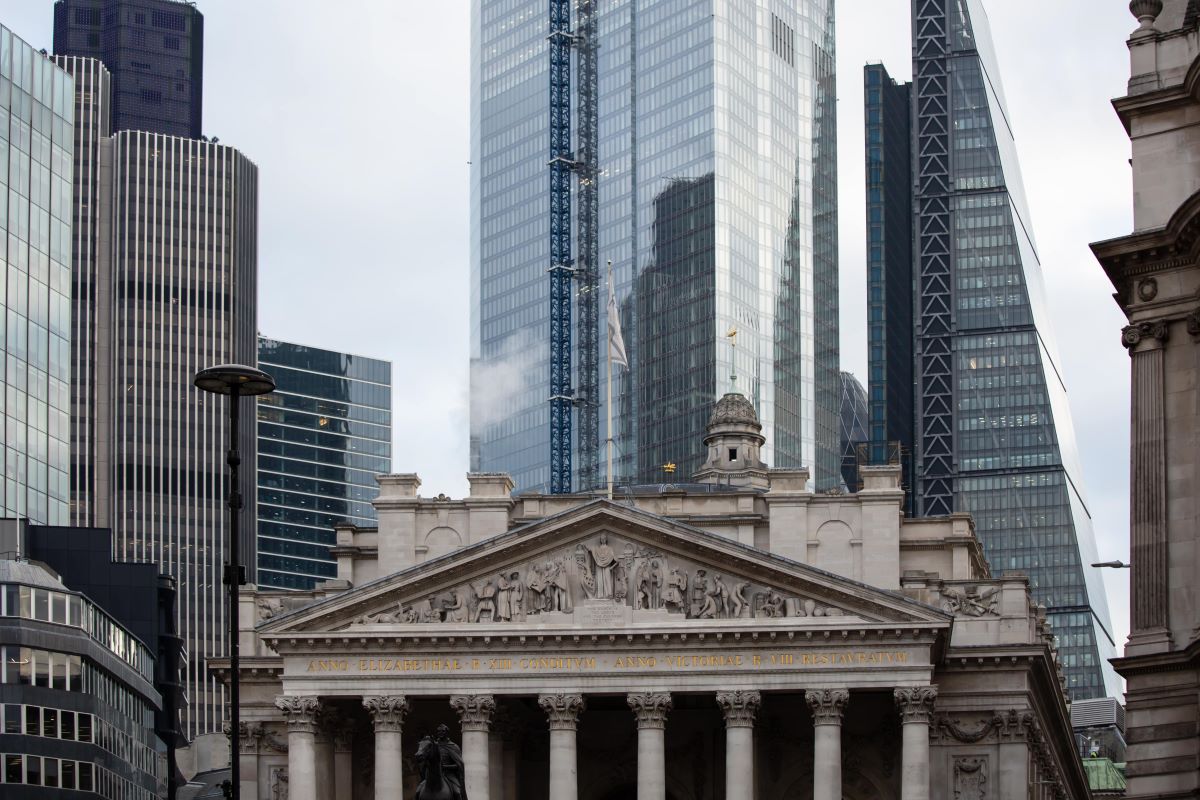
Sectors also tend to have sector level space and infrastructure needs and so I believe the rebalancing and consolidation of corporate portfolios can and should lead to further sector aggregation – after all why should major banks as an example not be co-located within individual buildings.
Sustainability
Anecdotally and logically, the current lockdowns globally will be having a dramatic impact on the environment, which will be fascinating to see once empirical evidence and analysis starts to emerge.
On the assumption that it is compelling, I believe that combined impacts of employee behaviours, corporate social responsibility and material reductions in commuting, business travel and office space will act as a strong force that will compel us not to return to the ways of the past. This impact should not be underestimated and I only hope that it is significant enough for us to change our course permanently.